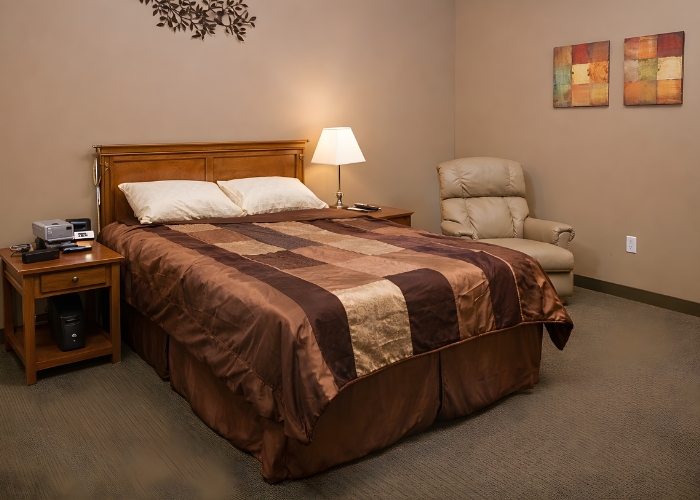
Comfortable sleepwear
Choose pajamas or loose, comfortable clothing you can sleep in while wearing monitoring sensors.
Know what to bring, how to prepare, and what to expect overnight. Our team is here to answer your questions before your sleep study.
Open a question to learn more. Your appointment instructions take priority because preparation may vary by study type.
Ask our teamOvernight studies usually finish early in the morning, often around 5:30–6:30 a.m. Confirm your Houston appointment’s expected departure time when scheduling.
If you wake earlier and cannot return to sleep, speak with your technician before ending the study. If you need a different departure time, discuss it with the team in advance.
Bring comfortable sleepwear, toiletries, and any nighttime or as-needed medications your clinical team has asked you to bring. A nightgown, shorts and a T-shirt, or a two-piece pajama set can work well.
Have your current medication list available, and follow any additional instructions provided for your particular test. You can also bring your own pillow for comfort.
Ask your ordering clinician which medicines to take before and during your study. Do not stop, skip, or change a prescription on your own; instructions can differ depending on the medication and type of sleep test.
If you use an over-the-counter or prescription sleep aid, discuss it with the team in advance. Only take an approved sleep aid at the time your clinician or study team instructs, after arrival—not before driving to the lab.
A sleep aid is not required for everyone. If you are worried about sleeping in a new setting, let us know so your clinician can discuss suitable options and whether a medicine could affect the study.
Follow the preparation instructions for your test. For an overnight study, the team may ask you to avoid caffeine after noon, alcohol that afternoon or evening, and daytime naps.
If you take a stimulant or wake-promoting medication, ask your prescribing clinician and sleep team for a specific plan. Do not withhold it based only on general website instructions.
Yes. A familiar pillow may help you feel more comfortable. Ask the team about the bedding provided and any other personal items you would like to bring.
Let your sleep technician know when you need to get up. They can help disconnect the recording connection safely while leaving the monitoring sensors in place when possible.
After you return to bed, the technician reconnects the equipment. Bathroom breaks can be accommodated; please ask for assistance rather than removing the sensors yourself.
A few familiar essentials can make your overnight visit feel easier.
Choose pajamas or loose, comfortable clothing you can sleep in while wearing monitoring sensors.
Bring toiletries and, if you prefer, a familiar pillow. Confirm any additional items with your study team.
Bring your medication list and the medicines your team requests. Confirm timing and any special instructions before the visit.
Your technician explains the setup and helps with questions throughout the night. The study records information that your clinician can use to assess your sleep.
Explore sleep studiesConfirm your instructions with the team, change into sleepwear, and ask any remaining questions.
The technician attaches removable sensors to record sleep and body signals such as breathing, oxygen levels, and heart rate.
Try to sleep as usual. Tell your technician if you need a bathroom break, feel uncomfortable, or have difficulty settling.
The team removes the sensors in the morning. Confirm how and when your results will be reviewed with your care provider.
It is understandable to wonder how well you will sleep away from home. Let the team know what usually helps you settle and whether you have any comfort or mobility needs.
You may sleep differently during a study. Your clinician will determine whether the recording provides enough information for interpretation.
Discuss your visit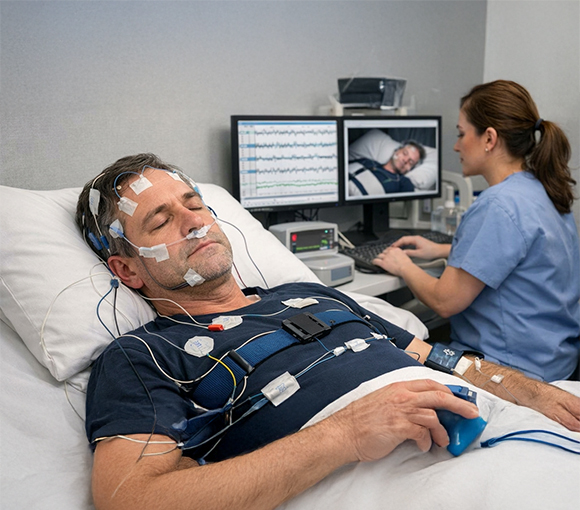
Contact our team to clarify your preparation instructions, discuss comfort needs, or confirm the details of your overnight visit.